

- +8615936540927
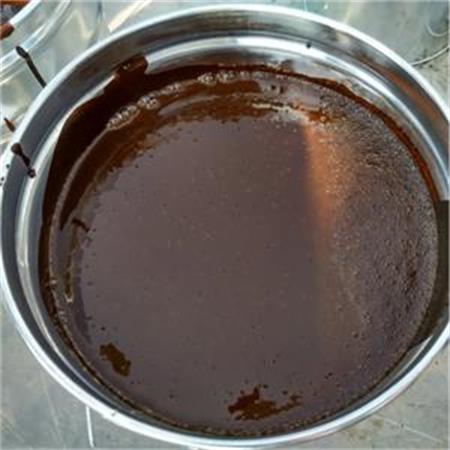
The finished product stability, uniformity, storage duration, and workability of emulsified asphalt depend on the material selection, standardized mix proportioning calculations, constant-temperature mixing, and standardized colloid mill emulsification operations. To facilitate standardized construction by asphalt mixing plants, road maintenance companies, and production line operators, this article detailed explains the complete production process of emulsified asphalt , including mix proportioning formulas, soap solution preparation standards, temperature control parameters, and equipment start-up and shutdown sequences. The entire process closely aligns with actual mass production conditions and can be directly used as a production line operation guide.
Before formal production, the total output of emulsified asphalt and the amount of emulsifier to be added must be calculated based on the water volume of the soap solution tank.
Standard mix ratio for conventional sprayable emulsified asphalt: 50% asphalt content , 50% soap solution (water + emulsifier) content .
That is, under the condition of a 1:1 oil-water ratio: 1 ton of clean water can produce 2 tons of finished emulsified asphalt .
Taking the CZ1 type medium cracking asphalt emulsifier as an example : the proportion of the emulsifier in the finished emulsified asphalt is 0.6% to 0.8% .
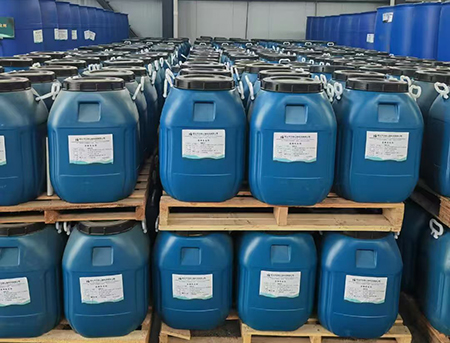
Meaning: For every ton of qualified emulsified asphalt, 6 to 8 kilograms of asphalt emulsifier need to be added .
Based on the production capacity of 2 tons of emulsified asphalt from 1 ton of water:
The minimum emulsifier dosage per ton of water is: 2 tons × 6 kg = 12 kg
The maximum amount of emulsifier required per ton of water is: 2 tons × 8 kg = 16 kg
After the proportions and weighing are completed, the soap solution preparation process begins. Temperature is a critical indicator for successful emulsification, and the dual-temperature standard must be strictly followed.
Standard temperature for base asphalt: 120℃~130℃
When the temperature of asphalt is too low, the viscosity is high, shearing is difficult, and the particles are large and prone to sedimentation; when the temperature is too high, the asphalt will age and reduce its bonding performance.
Standard temperature for soap solution: 60℃~70℃
If the water temperature is too low, the emulsifier cannot dissolve completely and its activity is insufficient; if the water temperature is too high, it will damage the molecular structure of the emulsifier and directly lead to emulsification failure.
Operating steps: Add the precisely measured asphalt emulsifier into the soap solution tank, pump in clean water heated to the standard temperature, turn on the stirring system and stir continuously until the liquid in the tank is clear and uniform, without lumps or floating flocs, ensuring that the emulsifier is completely dissolved and a qualified homogeneous soap solution is formed.
The colloid mill is the core equipment for emulsified asphalt production. The order of feeding and stopping directly determines the quality of the finished product and the service life of the equipment. The principle of " soap solution first, then asphalt; stop asphalt first, then stop soap solution " must be strictly followed.
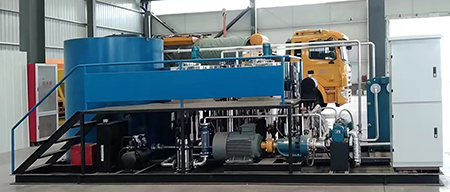
Step 1: Start the soap solution pump to allow the soap solution to enter the colloid mill first, wet the grinding chamber and fill the gaps, and prevent the equipment from being damaged by dry grinding.
Step 2: After the soap solution circulation stabilized, turn on the asphalt pump and send the 120-130℃ high-temperature matrix asphalt into the colloid mill.
Step 3: The soap solution and high-temperature asphalt are sheared, ground and dispersed at high speed inside the colloid mill to form a uniform and fine water-in-oil emulsion asphalt. The finished emulsion is continuously transported to the finished product tank for storage.
After production is completed, the asphalt pump must be shut down first to stop asphalt feeding.
Keep the soap pump running to continuously flush the colloid mill chamber and the pipeline with soap solution, washing away residual asphalt particles and preventing pipeline clumping and mill blockage.
After the equipment is thoroughly rinsed, turn off the soap pump and then stop the machine to complete the entire batch production.
1. Calculation by volume: The total output is calculated based on the water consumption of the soap solution tank, and then the emulsifier dosage is calculated based on the amount of asphalt emulsifier added, which is accurate and controllable;
2. Strict temperature control: Asphalt at 120-130℃ and soap solution at 60-70℃. Stable temperature is the basis for qualified emulsification.
3. Sequence Standards: When starting the machine, soap solution should be applied first, followed by asphalt; when stopping the machine, asphalt should be turned off first, followed by soap solution, to prevent demulsification and equipment blockage.
4. Stir thoroughly: The soap solution is completely dissolved and homogenized to ensure stable storage and excellent workability of the emulsified asphalt.
For related product information, see our asphalt emulsifier products.